PDI Tool.
An individual development plan for each person on a design team of thirteen.
PDI stands for individual development plan. The original is under NDA, so there are no real names or plans here. You can try a working version with a fictional sample team.
The model
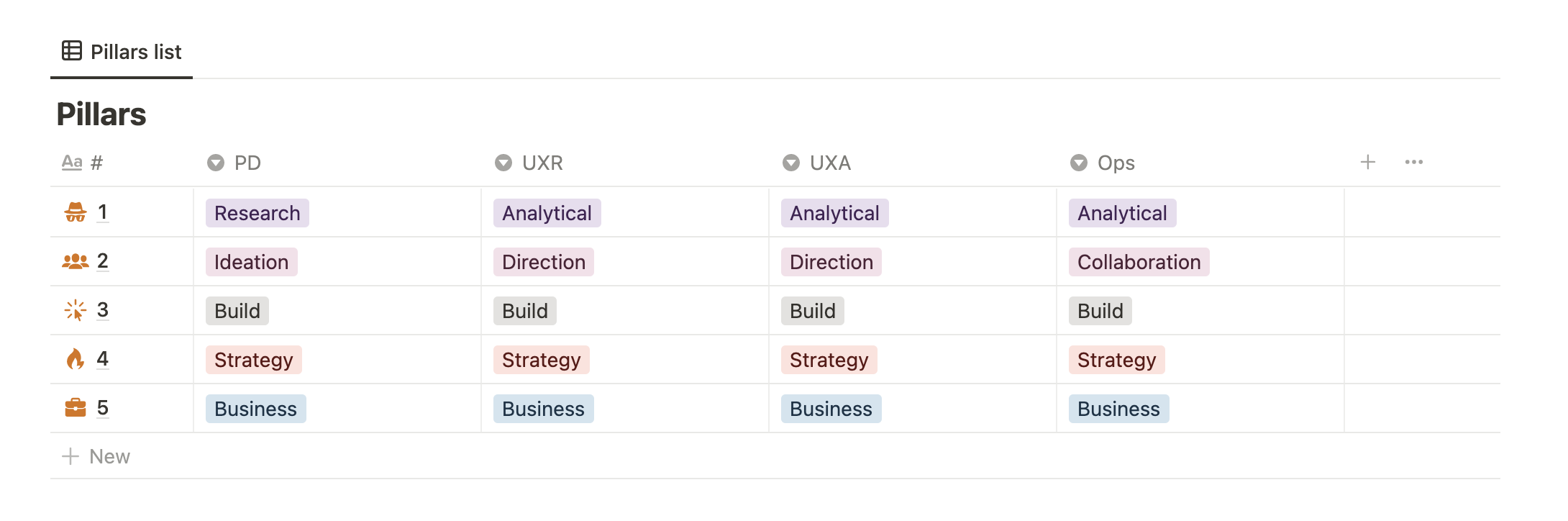
A team of product designers, UX researchers, UX analysts and design ops cannot grow on one shared ladder. So the levels were the same for everyone, and the pillars were not. Six levels, from Entry to Govern. Five pillars per role: a product designer is measured on research, ideation, build, strategy and business; a researcher on analytical, direction, build, strategy and business; design ops on collaboration instead of direction. Business meant knowledge of the company's world: blockchain, crypto and web3.
One ladder of levels. Different pillars for each role.
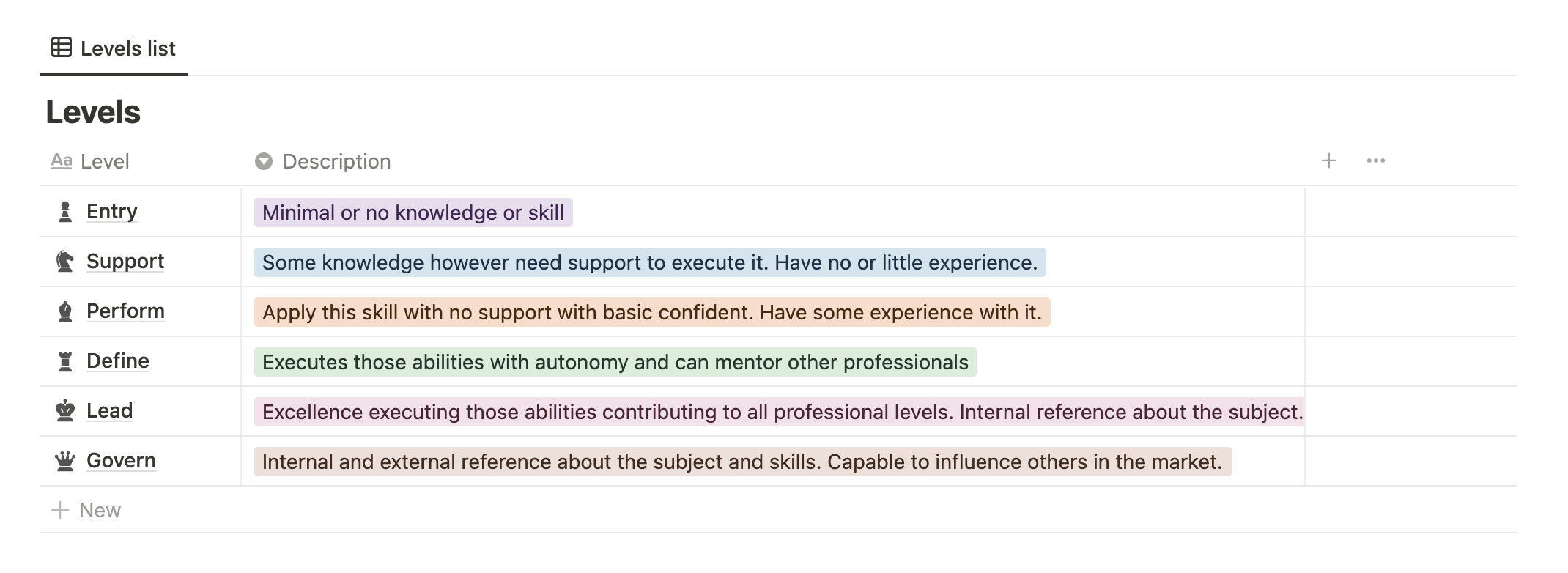
Six levels, the same for every role
- 1EntryMinimal or no knowledge of the skill.
- 2SupportSome knowledge, needs support to execute.
- 3PerformApplies the skill without support, with basic confidence.
- 4DefineExecutes with autonomy and can mentor others.
- 5LeadExcellence at every level. Internal reference on the subject.
- 6GovernInternal and external reference. Influences the market.
Five pillars, different for each role
| # | Product design | UX research | UX analytics | Design ops |
|---|---|---|---|---|
| 1 | Research | Analytical | Analytical | Analytical |
| 2 | Ideation | Direction | Direction | Collaboration |
| 3 | Build | Build | Build | Build |
| 4 | Strategy | Strategy | Strategy | Strategy |
| 5 | Business | Business | Business | Business |
Business meant knowledge of the company's world: blockchain, crypto and web3.
The plan
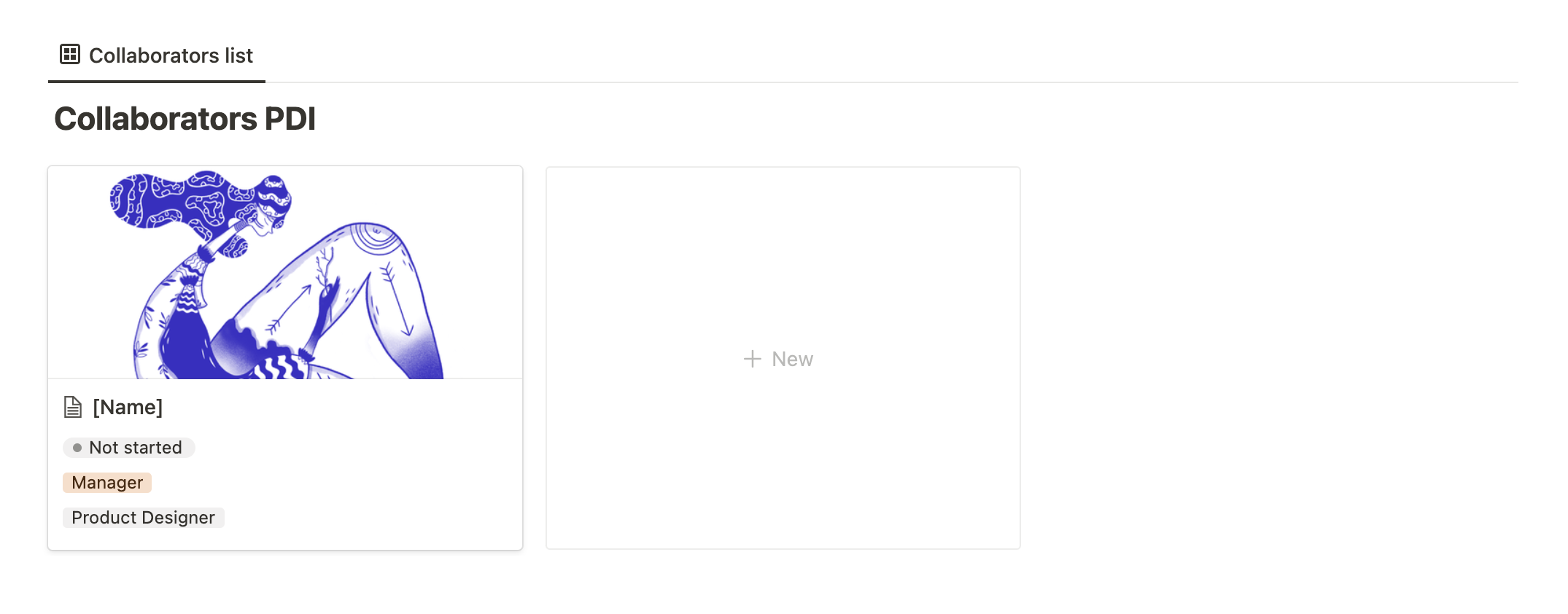
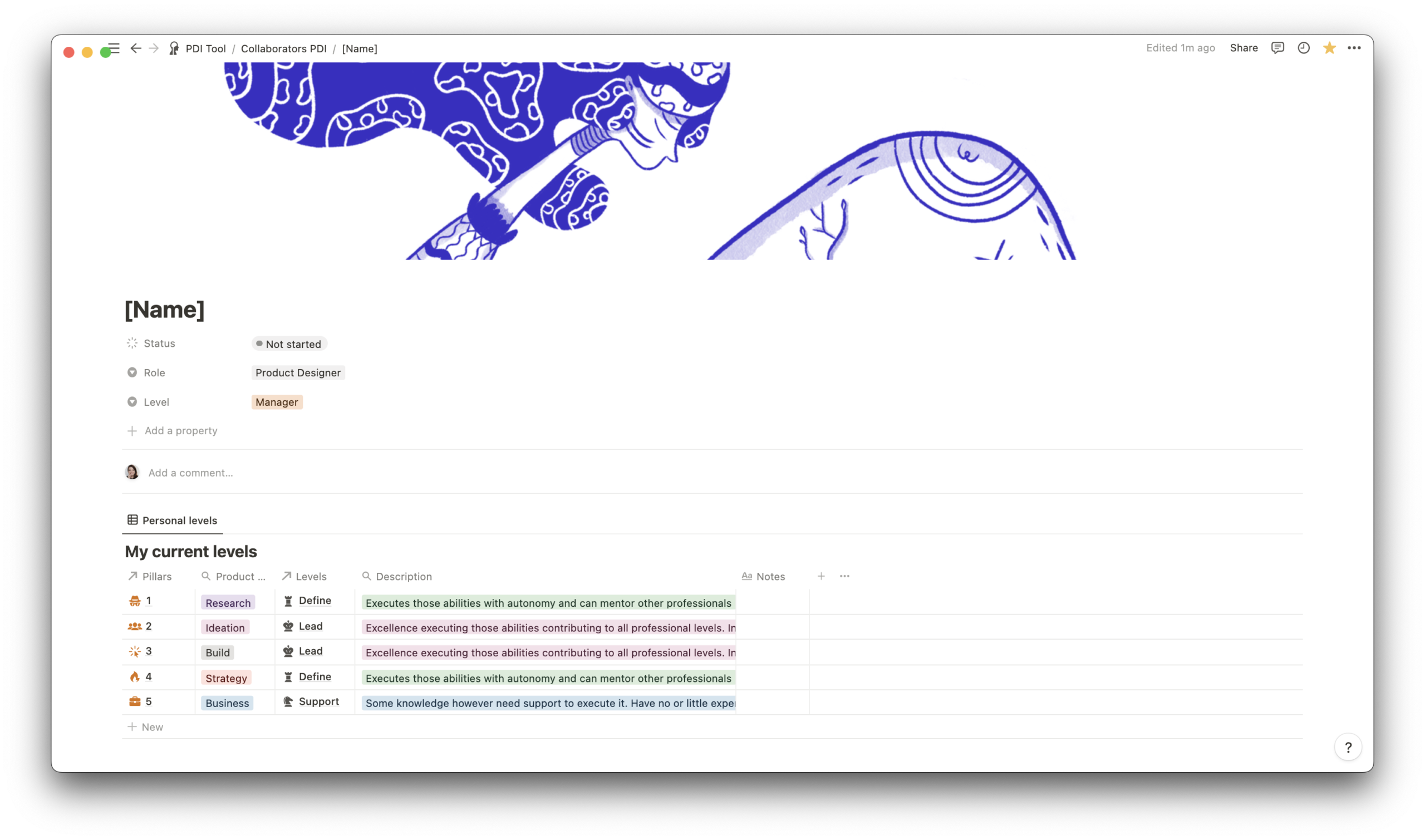
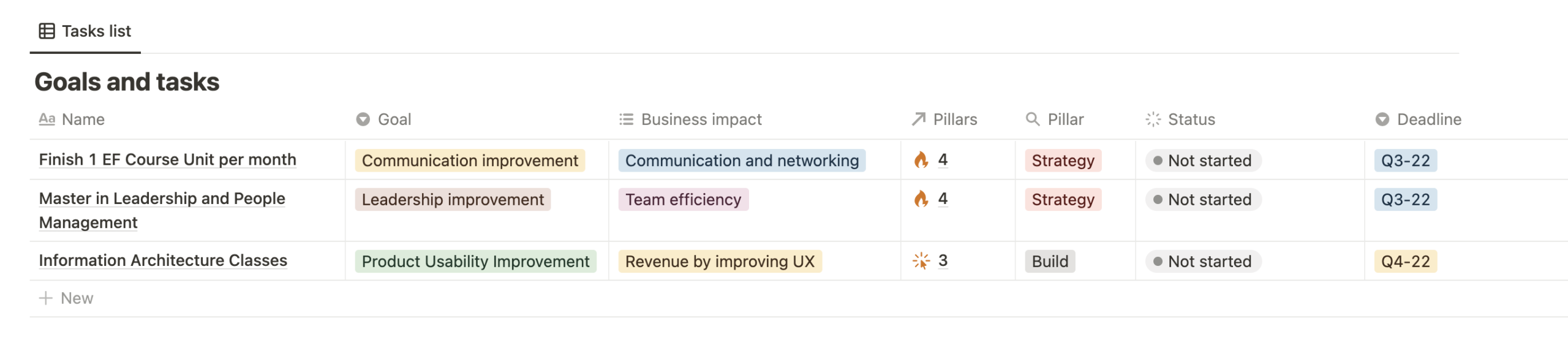
Each person had a page with their current level on each pillar, and a list of SMART goals. Every goal answered to three interests at once: the person's growth, the team's design maturity, and a business impact the company could see. One goal, one pillar, one impact, one deadline, reviewed in one-to-ones every two weeks.
Every goal answered to the person, the team and the business.
Where they are on each pillar, and where they want to go.
The design maturity the team needs next.
The impact the company can see.
One goal, one pillar, one business impact, one deadline. Reviewed in the 1:1s every two weeks.
| Example task | Goal | Business impact | Pillar | Deadline |
|---|---|---|---|---|
| Information architecture classes | Product usability | Revenue by improving UX | Build | Q4 |
| One course unit per month | Communication | Communication and networking | Strategy | Q3 |
The original, built in Notion.