
The matrix said no. We said yes anyway.
What a side project from 2017 taught me about prioritizing with a team that wants to learn.
In 2017, unemployment was the biggest problem in Brazil. In 2015, 13.8 million people did not have a registered job. I was a designer with a question I could not let go of: if full-time jobs were not coming back soon, could temporary work be easier to find?
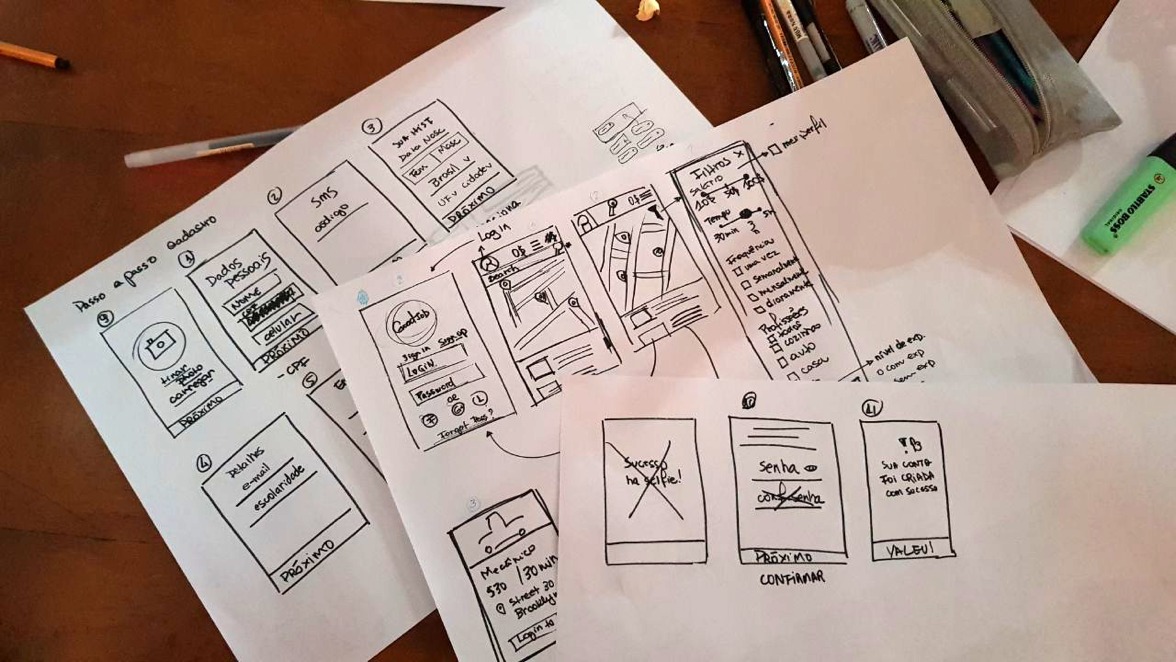
So I became the lead designer and product owner of a side project called Good Job, a mobile app to help people find temporary work near them while they looked for something permanent. It never left the concept stage. I still think about it, mostly because of one decision.
What we learned before designing
We started with a survey and interviews. A third of the people who answered were in full-time jobs, and about one in six were in a temporary one. The interviews were more useful than the numbers:
- People were not happy to say they were working a temporary job.
- It was hard to find anyone who actively wanted temporary work.
- Most of the people we could reach were looking for full-time contracts.
- Whoever hires for a temporary job looks for a recommendation first.
That last point should have shaped everything. Temporary work runs on trust, and trust travels through people.
We also played a game I still use with teams: "If I were...". If Good Job were Pokémon Go, how would it behave? If it were Uber, how would a person accept the nearest job? If both sides invested in crypto, how would payment work? It is a cheap way to escape the first idea in the room.
The matrix
We ended up with fourteen ideas and put them on an impact and cost matrix. It was honest. Geolocation was cheap and high impact. Digital payment and a conversational interface were big bets: high impact, high cost. And two ideas, an emotional questionnaire and a psychological questionnaire, landed where nobody wants to be: low impact, high cost.
The matrix said two of them were low impact and high cost. We chose them anyway.
- 1Digital payment
- 2Conversational interface
- 3Gamification
- 4Urgent job matches
- 5Emotional questionnaire
- 6Psychological questionnaire
- 7Job match notifications
- 8Skill chart vs job chart
- 9Testimonials
- 10Ranking
- 11Geolocation
- 12Quick feedback when canceling
- 13Number of applications
- 14Social sharing
We picked five of them: geolocation, digital payment, the conversational interface and both questionnaires.
The original case says it plainly: we had the chance to choose features that motivated the team. The conversational interface was new to everyone, and everyone wanted to spend time on it.
What I would do today
I do not think choosing for motivation was wrong. A side project with no budget runs on the team's curiosity, and a team that is learning something it wants to learn will show up on a Saturday. That is a real input, and I would put it on the matrix as its own axis instead of pretending it is not there.
What I would change is the order. Recommendations were the strongest thing we heard, and none of the five features was about trust between people. Today I would ship the quick win first, geolocation with a simple way to vouch for someone, put it in front of real people, and let the team earn the big bets with what they learned.
The matrix did not fail us. We just read it as a suggestion. Now, when I lead a team, I ask one question before we commit to a big bet: which of the things we heard does this answer?
Good Job was a concept project from 2017. Lead designer and product owner. The research, sketches and low-fidelity prototypes were done with a small volunteer team.
All writing